

Wisdom tooth extractionimpacted teeth
Wisdom teeth come in at the back of the mouth, usually between ages 17 and 25. When there isn’t enough room they can stay impacted in the bone or gum, push against the neighbouring tooth and cause pain, infection and decay.
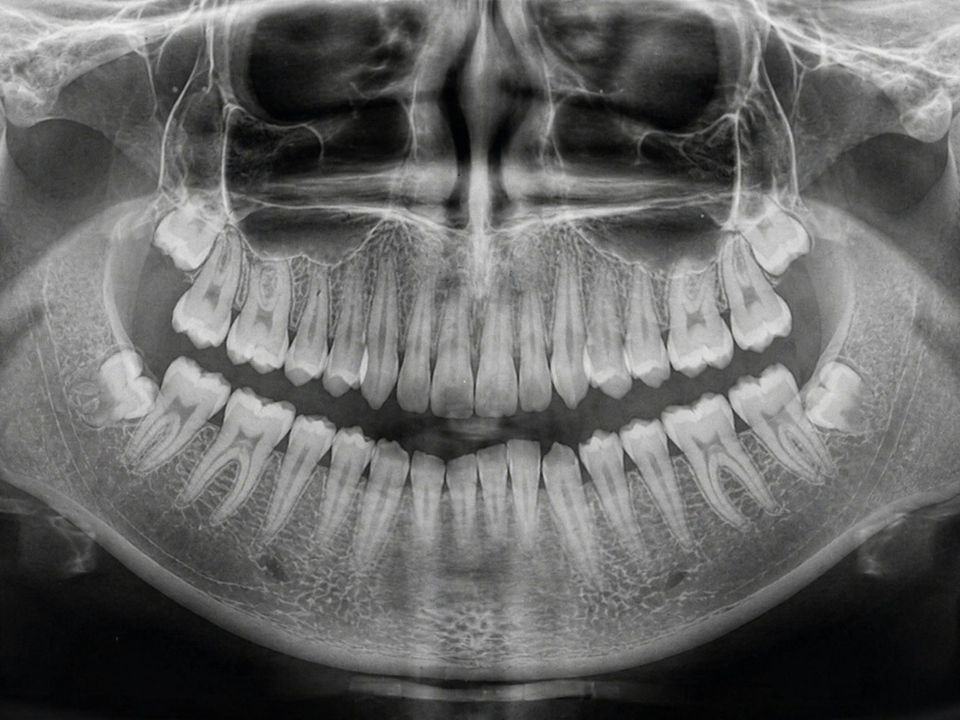
Not every wisdom tooth needs to come out. Its position and closeness to the nerve are assessed on X-ray; if needed it is removed at the clinic under local anaesthesia.
Who is it for?
Wisdom tooth removal is usually advised in these situations:
Whether it suits you is decided after an examination.
How is an impacted tooth removed?
Here you see a cross-section of the lower jaw. The impacted wisdom tooth leaning on its neighbour is removed under local anaesthesia, and the space fills with gum and bone over a few weeks.
Animation is illustrative; every patient’s plan and timeline is different.
Treatment step by step
- Examination and X-rayPosition, root shape and closeness to the nerve are assessed on a panoramic X-ray.
- PlanFurther imaging is requested if needed; the procedure and recovery are explained.
- AnaesthesiaThe area is numbed with local anaesthesia.
- ExtractionThe tooth is removed, in sections if needed, and the area is stitched.
- Check-upA check-up after one week; stitches are removed if needed.
Cold compresses, the recommended medicines and soft food make recovery easier.
Wisdom tooth extraction fees
Our fees follow the tariff of the Turkish Dental Association (TDB). The exact fee is given to you in writing after the examination.
- Position: under the gum or impacted in bone
- Number of teeth: how many are removed in one visit
- Imaging: whether advanced imaging is needed
Frequently asked questions
A short introduction to our clinic.
Does every wisdom tooth need removal?
No. Wisdom teeth that have come in straight, can be cleaned and cause no problems can stay.
Will it hurt?
It is done under local anaesthesia; you may feel pressure but usually no pain.
Will my face swell?
Swelling for 2–3 days is possible after impacted extractions; cold compresses help.
What should I eat afterwards?
Lukewarm, soft food on the first day; avoid hot and hard food and chewing on that side.
When can I fly home?
Most people return to daily activities within 1–2 days. Your dentist will advise on travel based on your extraction.
What is dry socket?
A painful condition caused by early loss of the blood clot in the socket. Smoking and spitting increase the risk.
Is your wisdom tooth causing problems?
Let’s check its position on X-ray and decide together whether it needs to come out.