
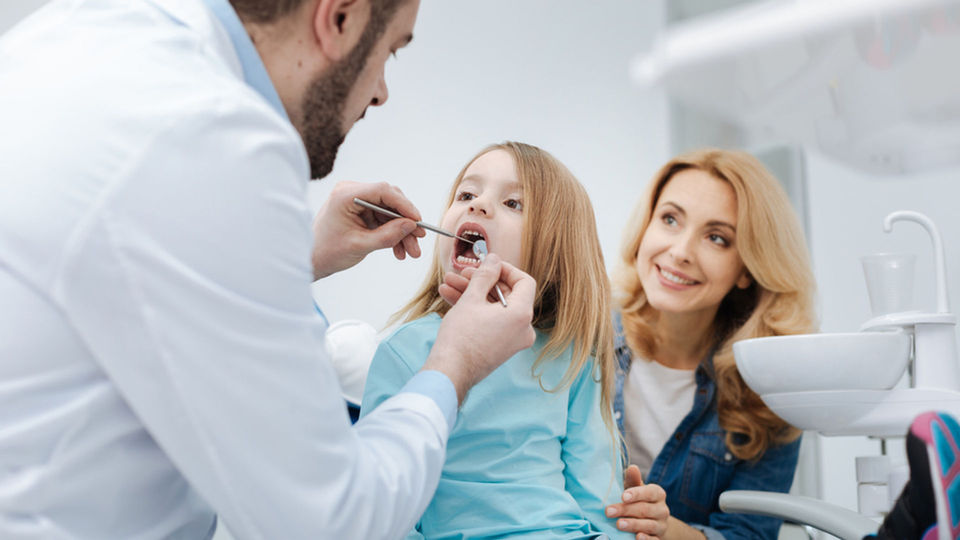
Why so early?
Problems such as baby bottle decay can start silently in the first months. An early visit lets the family learn about correct brushing, toothpaste amount, night feeding and dummies before problems appear. It also helps the baby get used to the dental setting without fear.
What happens at the examination?
- The family is asked about feeding, breastfeeding, bottles and medicines
- The baby is examined on the lap in a knee-to-knee position
- The teeth, gums, tongue tie and palate are checked
- Decay risk is assessed; fluoride varnish is applied if needed
- Brushing is demonstrated
- The next check-up is scheduled
How much toothpaste
From the first tooth, a children’s fluoride toothpaste is used. Under age three a rice-grain amount is enough, from 3 to 6 a pea-sized amount. There is no need to rinse after brushing; excess foam can be wiped away.
How to prepare
Choose a time when the baby is not sleepy or hungry. Note any medicines and your questions. Do not describe the dentist as a frightening place; think of it as a short, calm visit.
How often are check-ups?
For children at low risk of decay, a check-up every six months is usually enough. More frequent check-ups and fluoride may be recommended for higher-risk children.
Paediatric dentistry in Ankara
Our polyclinic is in Oran, Çankaya, and is open Monday to Saturday, 09:00–19:30. For baby and child examinations, call +90 312 911 60 36 or message us on WhatsApp.
 BABY TEETHTeething symptoms and what a teething baby's gums look like
 GUIDEWhich teeth get fissure sealants?