
What is a dental restoration: crowns and veneers
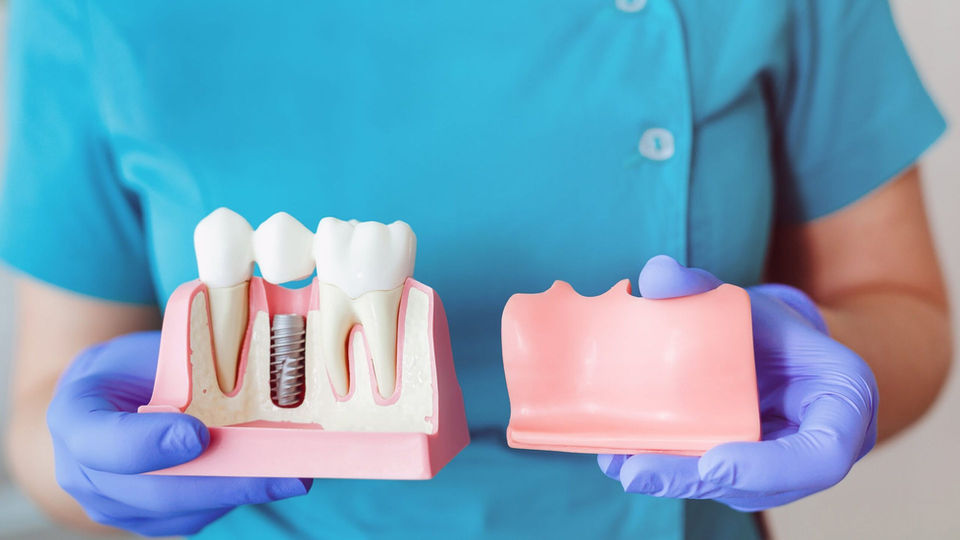
In dentistry, the word “covering” is used for two different treatments. A crown is a cap that encases the tooth on all sides and from above; it is used when a large part of the tooth has been lost, after root canal treatment, or when a bridge is to be made. A veneer, on the other hand, is a thin shell bonded only to the front surface of the tooth; it is preferred for problems of colour, shape and small gaps.
A crown requires more tooth reduction than a veneer. For a veneer, usually only a thin layer of enamel is removed; in some cases it can be placed with very little or no reduction at all.
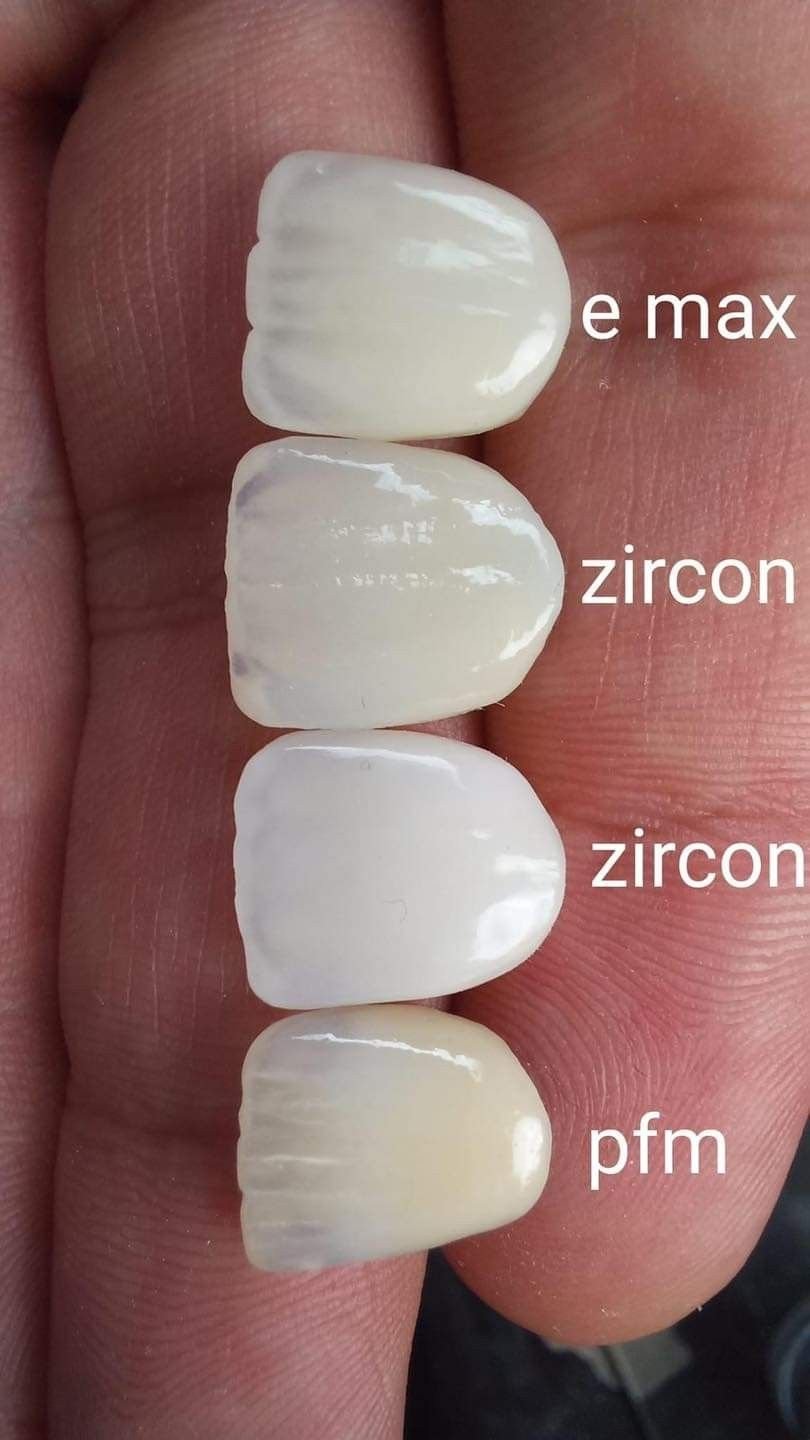
E.max (lithium disilicate glass ceramic)
E.max is a lithium disilicate glass ceramic made by Ivoclar. Because it transmits light in a way similar to a natural tooth, it gives a natural appearance, especially on front teeth. It contains no metal and does not create a grey line at the gum margin.
Because it can be made very thin, it is frequently used for veneers. It can also be used for single crowns and short anterior bridges; for long bridges spanning many teeth and for back areas subject to heavy chewing forces, zirconia is usually considered.
- Uses: veneers, front tooth crowns, inlays and onlays
- High translucency; lustre close to a natural tooth
- Attached to the tooth with adhesive cementation
- If you clench your teeth at night, a protective night guard may be recommended
Zirconia (zirconium oxide)
Zirconia is a high-strength, metal-free ceramic. It is often used on back teeth, where chewing forces are high, as well as for bridges and implant-supported crowns.
It can be made in two ways: crowns made entirely of zirconia (monolithic) and crowns with porcelain layered over a zirconia framework. New-generation zirconias with increased translucency can also be used on front teeth. When a dark tooth or a metal post needs to be masked, its opacity allows it to cover better than E.max.
- Uses: back tooth crowns, bridges, implant-supported crowns
- High strength; may be suitable for long bridges
- Contains no metal; no grey reflection at the gum margin
- Shades are chosen to match the tooth; the two zirconia examples in the photo are in different shades
Porcelain-fused-to-metal (PFM)
In porcelain-fused-to-metal crowns, a thin metal framework that fits onto the tooth is covered with tooth-coloured porcelain. It is a method that has been used for many years and can be applied to both single crowns and bridges.
Because the metal framework does not let light through, the appearance may be more opaque than that of all-ceramic crowns. If the gums recede over time, a dark line may become visible at the edge of the crown. For this reason, all-ceramic materials are preferred in most cases for front teeth that show when smiling.
- Uses: back teeth, bridges
- Contains a metal framework
- A dark line may be visible at the gum margin
- If a metal allergy is suspected, this should be discussed at the examination
Materials side by side
| E.max | Zirconia | Porcelain-fused-to-metal | |
|---|---|---|---|
| Material | Lithium disilicate glass ceramic | Zirconium oxide ceramic | Metal framework + porcelain |
| Translucency | High | Medium (increased in newer generations) | Low |
| Strength | Medium–high | High | High |
| Commonly used area | Front teeth | Back teeth, bridges, implant-supported | Back teeth, bridges |
| Veneers | Suitable | Limited | Not suitable |
| Long bridges | Usually not suitable | May be suitable | May be suitable |
| Contains metal? | No | No | Yes |
| Masking a dark tooth | Limited | Good | Good |
Crown and veneer side by side
| Crown | Veneer | |
|---|---|---|
| How does it cover the tooth? | Encases it on all surfaces | Bonded to the front surface only |
| Tooth reduction | More | Less; sometimes none |
| When? | Major loss of tooth structure, root-canal-treated tooth, bridge | Colour, shape, small gaps |
| Commonly used materials | Zirconia, E.max, porcelain-fused-to-metal | E.max, porcelain, composite |
Which material for which tooth?
Since aesthetics are the priority on front teeth, E.max veneers or E.max or translucent zirconia crowns are mostly considered. On back teeth and for bridges, strength comes first, so zirconia is often preferred. Porcelain-fused-to-metal is still an option in some back tooth and bridge cases.
The main factors that influence the choice are: the amount of healthy tissue remaining in the tooth, the colour of the tooth (dark or discoloured), any history of root canal treatment, the bite and teeth-clenching habits, the condition of the gums and your expectations. For this reason, the material is decided together after the examination and, if necessary, a digital scan.
How does the process work?
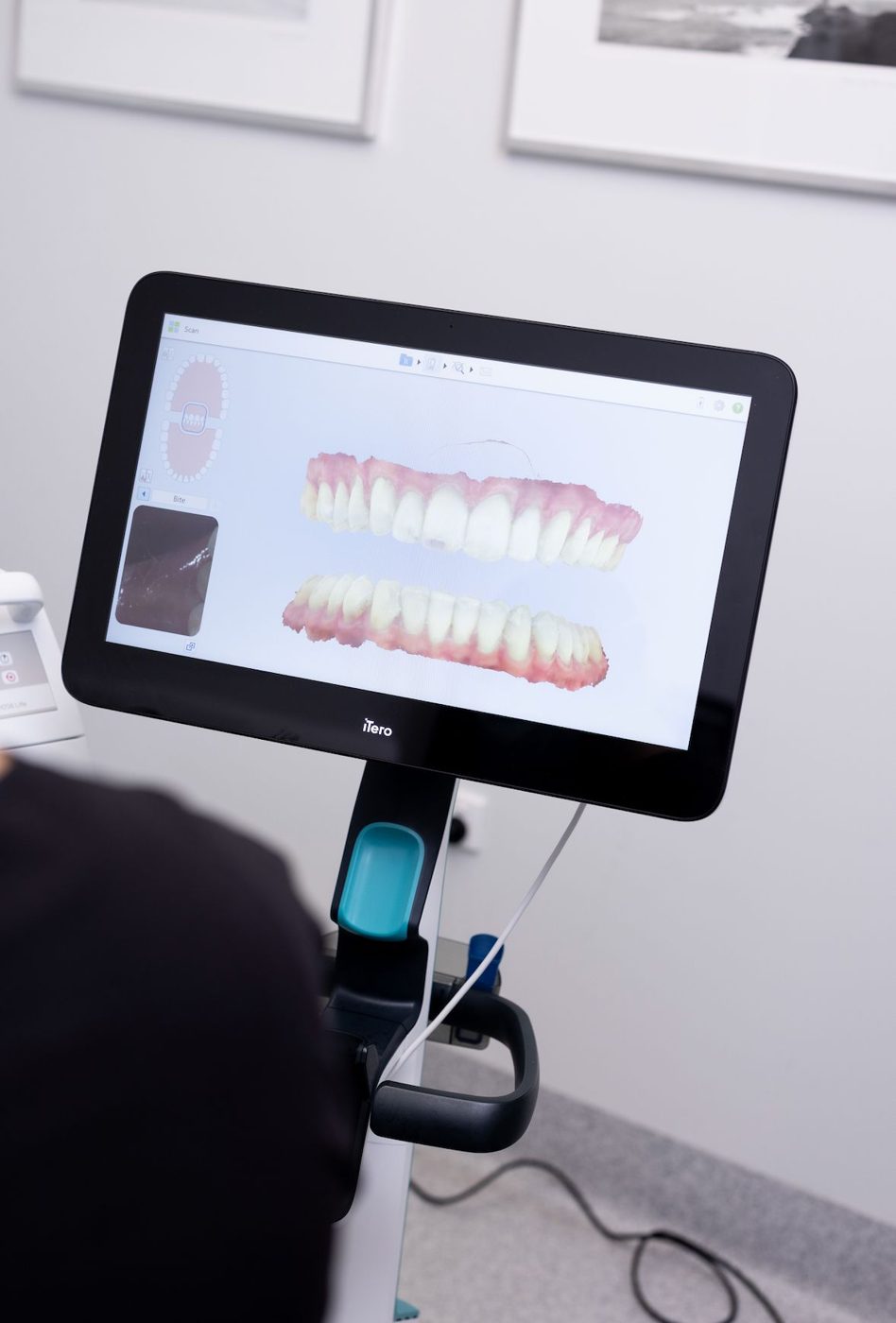
After the examination and, if necessary, X-rays, a treatment plan is made. Once the teeth have been prepared, an impression is taken; at our polyclinic, the impression can be taken digitally with the iTero intraoral scanner. Temporary crowns or veneers are fitted during the laboratory stage, followed by a try-in and bonding.
The number of appointments and the duration vary depending on the number of teeth and the material chosen; treatment is usually completed in a few appointments.
- Examination and planning
- Tooth preparation and digital impression
- Temporary restoration
- Try-in and shade check
- Bonding and follow-up appointment
Care
Crowns and veneers are brushed just like natural teeth, and dental floss or interdental brushes are used. Because the tooth underneath can still develop decay, regular check-ups are important. If you clench or grind your teeth, a night guard can help protect the restorations. How long they last varies from person to person depending on oral hygiene, habits and check-ups.
 GUIDEInvisalign vs braces: 7 differences
 DAILY USEHow to clean Invisalign aligners
 PROCESSWhat you feel in the first week of Invisalign